


Double your impact
by making a gift during
Giving Days May 7 & 8
Thomas & Hutton and Eagle Rock Partners have proposed an approximately 850-acre data center campus on rural timberland along Cooks Hill Road, south of Walterboro. The project site is located in the ACE Basin, one of the largest intact estuarine ecosystems on the Atlantic Coast.
The site plan includes:
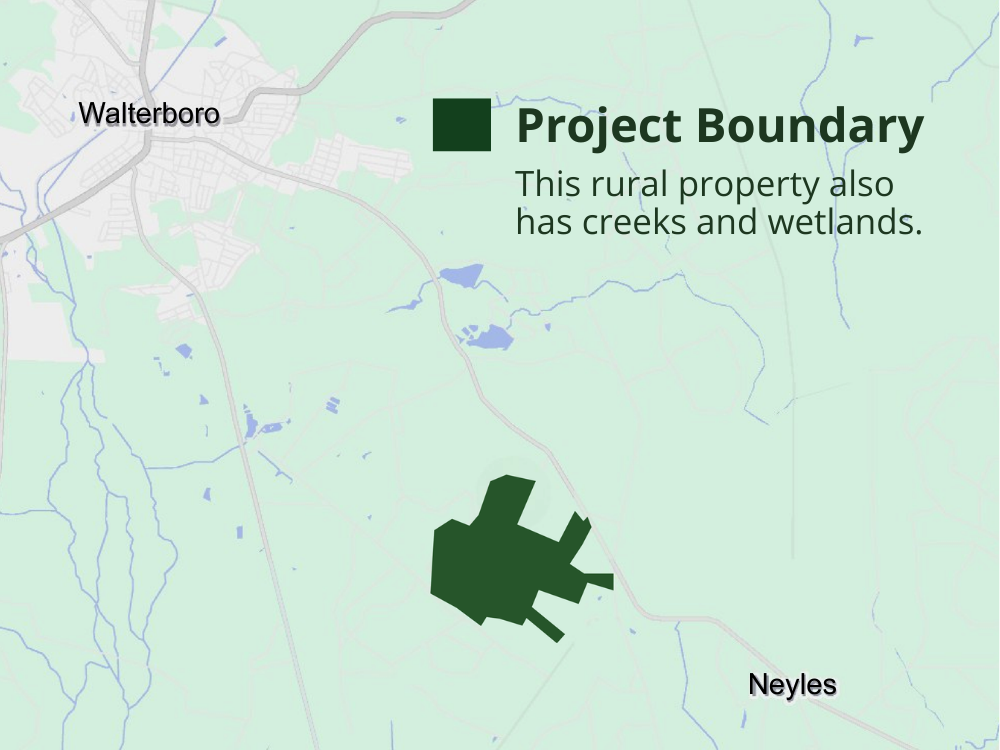
.png)
The property sits in a landscape designated as a Rural Development area under Colleton County's zoning code. The county’s Comprehensive Plan designates this area as “countryside,” defining the land use category as one that “promotes residential uses at low densities to protect areas adjacent to farmland/cropland/agricultural uses.” An industrial-scale data center campus is not compatible with that vision. Accordingly, the data center requires Colleton’s Board of Zoning Appeals to grant a special exception for this project. You can read the full application for special exception here.
The Board of Zoning Appeals has not yet scheduled the public hearing for this request. We encourage you to subscribe to our email alerts to get updates delivered straight to your inbox.
In addition to the project’s inconsistency with local land use and zoning laws, it also presents a swath of other public policy and public health concerns worthy of consideration by this Board, including but not limited to: mass energy use, health risks, water quality and quantity concerns, air quality impairment, noise and light pollution, and quality of life impacts.
One thing is clear: a massive data center campus does not belong in the ACE Basin.
Data centers don't arrive in isolation. Large data centers require large, continuous supplies of water. These facilities can:
When sited near wetlands, aquifers or sensitive rural landscapes, those demands warrant careful, transparent review – not expedited approvals.
Across the Southeast, data center growth is also driving demand for new power generation.
These proposals are moving on separate tracks, but the underlying dynamic is clear:
Each project may be reviewed individually, but the cumulative impact harms the same landscape and the same people.
Walterboro and the surrounding areas of Colleton County are considered disadvantaged in terms of poverty, health outcomes and high energy costs. Siting high-impact industrial infrastructure in communities already carrying disproportionate health and economic burdens is not inevitable – it is a choice. Pollution burdens are not evenly distributed, and the people who stand to bear the greatest consequences of this proposal deserve to have their voices heard first.
The ACE Basin is not just an ecological treasure. It is home to families, traditions and a living culture that cannot be relocated or replaced.
SCELP is closely monitoring zoning decisions, permitting processes and related infrastructure proposals that could affect this area. Our role is to ensure that major land-use decisions comply with the law, including Colleton County's zoning code and Comprehensive Plan, South Carolina's environmental statutes and the public-interest standards that govern utility approvals.
That means scrutinizing whether special exceptions and permits are lawfully granted, whether environmental impacts are fully evaluated and whether communities have a meaningful opportunity to be heard before irreversible decisions are made.
South Carolina does not have to trade public health and environmental protection for innovation. South Carolinians deserve transparent, lawful decision-making, not rushed approvals that leave local communities and ecosystems paying the price.
SCELP exists to make sure growth in this state happens within the guardrails of the law, guided by science, public process and long-term stewardship, not short-term demand.
This page will be updated as new information becomes available.


